When most people hear the word security, they immediately think about digital threats—hackers, phishing scams, stolen passwords, and malware. Businesses invest heavily in cybersecurity audits to protect their systems, data, and operations.
But here’s the truth many homeowners overlook:
✅ Security isn’t just digital.
Your home has vulnerabilities too—and one of the biggest entry points is your garage door.
Just like a cyber audit identifies weak spots in a business network, a professional garage door inspection and repair identifies weak points in your home’s “physical security system.” And if those flaws aren’t fixed in time, they can lead to expensive damage, safety hazards, and serious security risks.
Let’s break it down.
A Cyber Audit vs. Garage Door Repair: The Same Concept, Different World
A cybersecurity company audits a business to answer questions like:
-
Where are the vulnerabilities?
-
What’s the risk level?
-
How can we fix it?
-
What should be updated now vs. later?
Garage door repair works the same way—except instead of digital systems, you’re dealing with:
-
Springs
-
Cables
-
Tracks
-
Rollers
-
Sensors
-
Openers
-
Locks and reinforcement parts
Your garage door is the largest moving object in your home, and it’s also one of the most commonly targeted access points for break-ins.
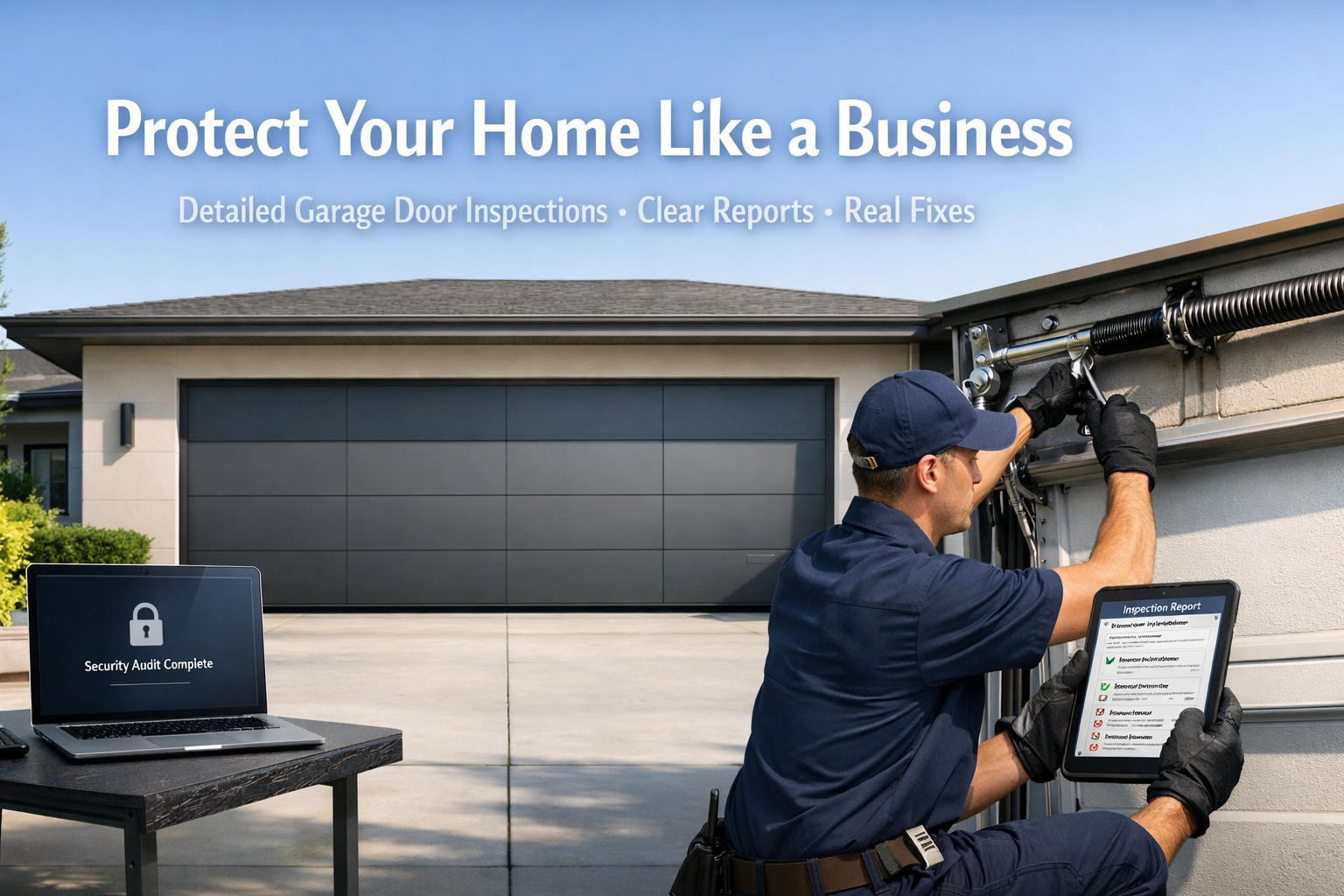
Why the Garage Door Is a Major Security Weak Point
Most homeowners focus on:
✅ front door locks
✅ cameras
✅ alarm systems
…but the garage door often gets ignored, even though it can be vulnerable in ways people don’t notice until something goes wrong.
Here are the most common “security gaps” we find in garage doors:
1. Weak or Worn Springs
A failing torsion spring doesn’t just cause the door to malfunction—it can also:
-
leave the door partially stuck open
-
prevent it from closing fully
-
cause sudden failure when you least expect it
If your garage door isn’t closing properly, your home could be exposed without you even realizing it.
2. Misaligned Tracks
A track that’s slightly bent or loose can cause:
-
jerky movement
-
uneven closing
-
gaps along the sides
-
loud grinding noises
Those gaps can become a physical security vulnerability, especially at night.
3. Broken Rollers and Hinges
When rollers wear out, the garage door may:
-
wobble
-
get stuck halfway
-
slam shut unexpectedly
Beyond the safety risk, a door that doesn’t operate smoothly is a door that’s easier to force, damage, or compromise.
4. Faulty Sensors (Photo Eyes)
Garage door sensors are a safety feature, but also a security one.
If sensors aren’t aligned, dirty, or malfunctioning, your door may:
-
refuse to close
-
reverse unexpectedly
-
stay open even after you hit the button
That’s like leaving your business system unlocked because the firewall “glitched.”
5. Outdated Opener Technology
Older openers may lack modern security protections like rolling-code technology, which helps prevent signal theft or remote hacking attempts.
Upgrading your opener isn’t just “a luxury.”
It’s a security update.
Garage Door Repairs = Physical “Security Patches”
In cybersecurity, after an audit, you don’t just get a warning—you get solutions.
That’s how a great garage door repair Culver City CA company should operate too:
✅ identify the flaw
✅ explain how it happened
✅ fix it properly
✅ prevent future breakdowns
✅ recommend what to address next
Because real professionals don’t just repair what’s broken today—they protect you from what could fail tomorrow.
The Power of a Detailed Report (And Why It Builds Trust)
One reason businesses love cyber audits is because they receive an easy-to-read report that explains:
-
what was discovered
-
how the testing was done
-
what issues are urgent
-
recommended fixes and timelines
A high-quality garage door inspection should deliver the same kind of clarity.
A real technician should be able to show you:
-
where the wear is happening
-
which parts are failing
-
what’s causing the noise or imbalance
-
what needs adjustment vs. replacement
-
what can wait and what can’t
If your technician can’t clearly explain the problem, it’s like a cybersecurity company saying:
“You’re at risk…trust us.”
That’s not good enough.
Security = Prevention, Not Panic
A cyber audit helps businesses avoid:
-
downtime
-
costly breaches
-
reputation damage
-
emergency repairs
Garage door repairs help homeowners avoid:
-
being locked out
-
broken springs at the worst time
-
damaged vehicles
-
unsafe door drops
-
expensive last-minute replacements
-
vulnerable entry points
When your garage door runs smoothly and closes perfectly every time, your home becomes harder to access, harder to exploit, and much safer overall.
The Best Garage Door Repairs Are Built Like a System
Here’s what professional garage door security-focused service looks like:
✅ Full inspection (not just a quick fix)
✅ Identifying root cause (not symptoms)
✅ Tightening and reinforcing key components
✅ Lubrication and balance testing
✅ Safety sensor testing
✅ Opener force adjustment
✅ Hardware upgrades when needed
✅ Clear next-step recommendations
That’s how you protect your home with confidence.
When Should You Schedule a Garage Door “Security Audit”?
If you notice any of these signs, it’s time:
-
door shakes or feels uneven
-
door reverses unexpectedly
-
door closes but leaves gaps
-
loud grinding or squealing sounds
-
slow response from opener
-
remote works inconsistently
-
door looks crooked or off-track
-
springs look stretched or worn
-
you’ve never had a full inspection before
Even if your garage door is “working,” it might not be working securely.
Peace of Mind Is the Best Upgrade
Businesses protect their systems with audits because they understand one simple truth:
✅ Vulnerability always costs more when ignored.
Your home is no different.
A garage door that’s strong, properly aligned, reinforced, and maintained is a major part of real-world home security—and it protects what matters most:
-
your family
-
your vehicles
-
your tools
-
your property
-
your peace of mind
If security matters to you digitally, it should matter physically too.
Because security isn’t just digital.